


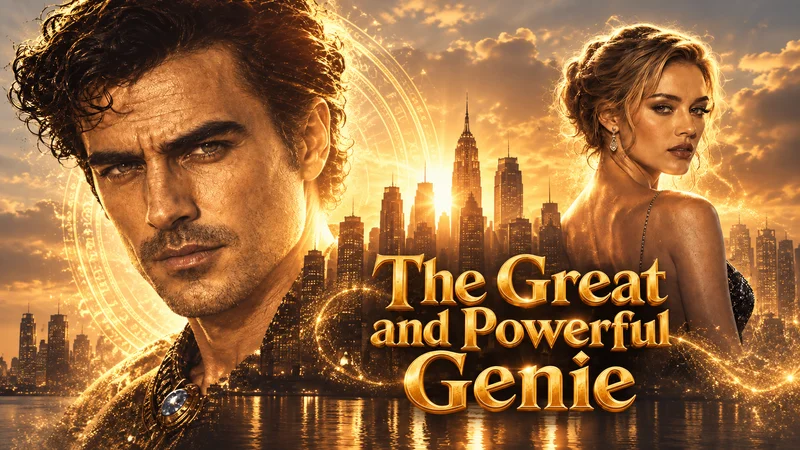
For thousands of years, Elijah Baran can grant other people extraordinary wishes while having almost no control over his own future. That contradiction gives The Great and Powerful Genie its central freedom theme. Elijah possesses immense supernatural power, yet the one thing he cannot simply give himself is an independent life beyond the magic lamp.
This article explains Elijah Baran’s road to freedom, from the billionaire’s final wish and his transformation into a human to the five-year marriage that places another condition on his new life. On ShortFlix, freedom is not presented as one magical moment. Elijah has to move through several stages before he reaches a point where the next direction of his life can truly belong to him.
The distinction matters because leaving the lamp does not immediately solve everything. Elijah gains a human life, but that life begins under a marriage agreement created by someone else. His journey therefore asks a larger question: when is a person actually free if someone else is still deciding what must happen next?
Why Elijah Cannot Free Himself From the Magic Lamp
Elijah begins the story as a genie whose power exists primarily for other people. He can grant three wishes to whoever controls the lamp, but those abilities do not give him ownership over his own future.
This creates an unusual imbalance between power and freedom. Elijah can change another person’s circumstances through magic while remaining bound to a life he did not choose for himself.
After thousands of years, freedom represents more than simply leaving one location. It means ending an existence defined by serving the wishes of others and gaining the possibility of making decisions that belong to him.
That starting point is important because it explains why Elijah is willing to accept a difficult condition when the billionaire finally offers him a path out.
How the Billionaire’s Final Wish Gives Elijah a Way Out
The billionaire’s last wish changes Elijah’s situation because it creates a route from supernatural servitude to human life. For the first time, the possibility of leaving the lamp becomes real.
But the wish does not simply release him without conditions. Elijah must become human, marry the billionaire’s granddaughter Christine, and remain in that marriage for five years.
This makes the gift more complicated than it initially appears. The billionaire removes one restriction while immediately placing another structure around Elijah’s future.
Elijah therefore receives freedom in a limited form. He can leave the lamp, but he cannot yet decide entirely how the next five years of his life will unfold.
Why Freedom Comes With a Five-Year Marriage
The five-year marriage is what separates Elijah’s release from complete independence. In the great and powerful genie ShortFlix, the condition makes freedom something Elijah has to complete rather than something he receives instantly.
The arrangement creates a clear trade-off. Elijah can finally become human, but part of that new human life already belongs to an obligation established through the billionaire’s final wish.
The structure of the deal can be understood through four stages:
- Elijah is bound to the lamp: his existence is controlled by the rules of being a genie.
- The final wish opens a path out: becoming human gives him access to a different life.
- The marriage creates a new obligation: five years of that life are still shaped by someone else’s condition.
- The end of the agreement restores choice: Elijah eventually reaches a point where the next step is no longer dictated by the wish.
This progression is the foundation of the film’s freedom theme. Elijah is moving toward independence, but he reaches it in stages rather than through one instant transformation.
Becoming Human Is Only the First Step Toward Freedom

Elijah’s transformation into a human is a major change, but it does not automatically make him independent. He gains a new body and a new way of living while still carrying the responsibility attached to the final wish.
This difference is important because physical release and personal freedom are not the same thing. Elijah is no longer trapped inside the lamp, yet the direction of his life remains partially predetermined.
Human life also introduces choices that did not define his existence as a genie. Marriage, work, relationships, disappointment, and future plans now matter in ways they could not while his role was simply to grant wishes.
The transformation therefore gives Elijah the ability to experience freedom before he fully possesses it. He can live as a human, but complete independence must wait until the condition that brought him into that life has run its course.
The Marriage Shows the Limits of Conditional Freedom
A condition can create opportunity while still restricting the person receiving it. Elijah’s marriage demonstrates that tension clearly.
The five-year agreement does not return him to the same captivity he experienced as a genie. He can live outside the lamp, build a human life, and form relationships. However, one major part of that life remains fixed: he must stay married to Christine until the required period is complete.
This makes Elijah’s freedom conditional rather than absolute. He has more control than before, but not enough to treat every major decision as his own.
The story becomes more interesting because the restriction is temporary. Elijah knows there is an endpoint. Every year he completes brings him closer to a moment when the original wish will no longer determine whether he stays or leaves.
Christine Is Part of Elijah’s Freedom Test
Christine plays an important role in Elijah’s five-year obligation because she is the person he must marry. Their relationship also becomes emotionally significant as Elijah spends years beside her and secretly supports her rise as a successful CEO.
However, Elijah’s road to freedom is larger than whether the marriage succeeds. Christine represents one of the realities he encounters after becoming human: gaining freedom does not guarantee that every relationship inside that new life will be fulfilling.
Her treatment of Elijah eventually affects what he wants once the agreement nears its end, but the broader freedom question remains the same. The contract can require him to remain married for five years. It cannot permanently decide what he must choose after those five years are complete.
This distinction keeps the freedom theme separate from the deeper relationship analysis. The marriage matters because it tests how much control Elijah truly has over the human life he was given.
What Changes When the Five-Year Agreement Ends
The end of the marriage condition creates the most important structural shift in Elijah’s story. Before that point, staying with Christine is connected to the billionaire’s wish. Afterward, the original obligation no longer provides the same reason for him to remain.
This is where conditional freedom begins turning into personal agency. Elijah can finally evaluate his future without the lamp or the billionaire’s condition deciding the answer for him.
The story confirms that Elijah ultimately decides to divorce Christine. The significance of that choice for this article is not every emotional reason behind the divorce. Those reasons belong more directly to the relationship and decision-focused parts of the film.
For the freedom theme, what matters is that Elijah reaches a stage where the direction of his life can come from his own decision rather than from someone else’s wish.
FAQs About Elijah Baran’s Freedom
Why is Elijah Baran trapped in a magic lamp?
The story establishes Elijah as a genie who has spent thousands of years bound to a magic lamp and granting three wishes. The available premise does not provide a deeper explanation for how he originally became trapped there.
How does Elijah become free?
A billionaire uses his final wish to give Elijah a path out of the lamp. The freedom comes with a condition: Elijah must become human, marry Christine Parrish, and remain married to her for five years.
Is Elijah completely free after becoming human?
No. Becoming human releases him from the lamp, but the five-year marriage still shapes an important part of his new life. His independence remains conditional until the agreement reaches its end.
Why is the five-year marriage important?
The marriage creates the period between Elijah’s release from the lamp and the point where he can make his next major life decision without the billionaire’s wish determining what he must do.
Does Elijah eventually choose divorce?
Yes. The story confirms that Elijah decides to divorce Christine as the five-year period approaches its end. For his freedom arc, the importance of that decision is that it comes from Elijah himself rather than from another person’s wish.
Final Thoughts
The Great and Powerful Genie makes Elijah Baran’s road to freedom a gradual process. The billionaire’s final wish releases him from the lamp, but becoming human does not immediately give him complete independence. The five-year marriage places another condition between Elijah and the fully self-directed life he wants.
That structure gives freedom several meanings throughout the story. It begins as physical release, becomes conditional independence, and eventually turns into the ability to decide what happens next without another person setting the terms.
Elijah’s road to freedom therefore ends somewhere more meaningful than the moment he leaves the lamp. His real turning point comes when the conditions surrounding his new life stop making the decision for him. At that stage, freedom is no longer something granted through a wish. It becomes something Elijah can finally exercise for himself.

Clara Monroe is an experienced short film blog writer at ShortFilx, covering standout shorts, festival picks, and rising filmmakers with clear craft insights and trustworthy recommendations.