


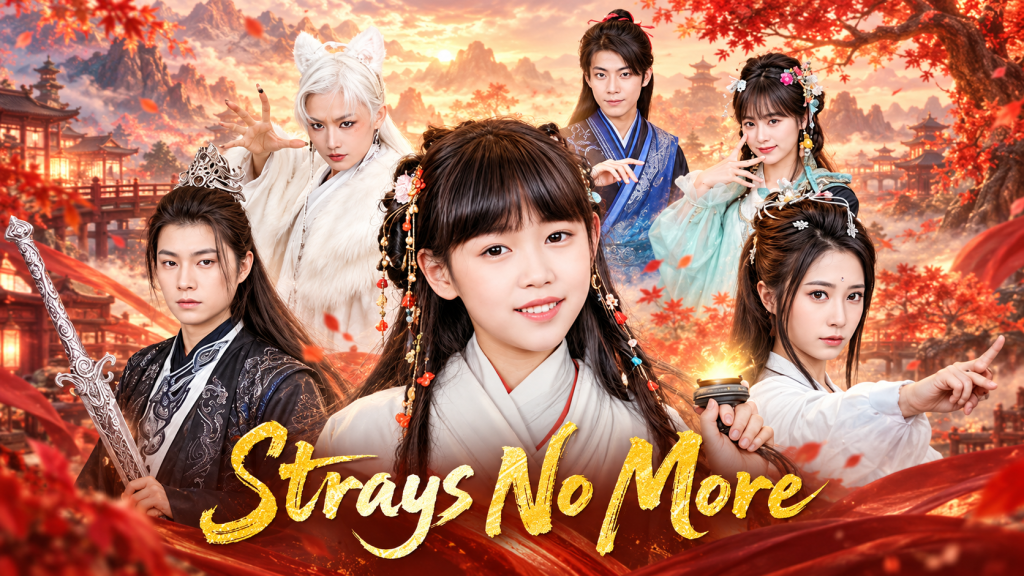
Strays No More follows Aurelia, an orphaned girl who wants a family in a world of immortal cultivation. Blamed for her grandfather’s death and rejected by those around her, she begins gathering lost souls after meeting an ancient spirit beast named Snowy. The people she brings home possess remarkable identities, but the story’s strongest hook is the ordinary need that connects them: belonging.
This Strays No More review examines Aurelia’s emotional journey, Snowy’s place in the premise, and the unlikely household that forms around her. Based on the supplied synopsis, it assesses the character relationships, narrative structure, and themes without making unsupported claims about performances, visual effects, or events beyond the described story.
The drama is best suited to viewers who enjoy fantasy built around chosen family, a vulnerable protagonist, and relationships that offer an answer to rejection. For readers exploring stories on ShortFlix, its main attraction is watching a wish for home give purpose to an extraordinary collection of people.
What Is Strays No More About?
Aurelia begins the story without the security she wants. She is orphaned, treated as an outcast, and blamed for her grandfather’s death. That accusation makes her isolation more painful because loss is accompanied by condemnation. The synopsis establishes what others say about her, but it does not explain the circumstances of the death.
Meeting Snowy, an ancient spirit beast, marks a change in the direction of her story. Aurelia begins bringing lost people into her life. A mother arrives from the sky, a father is found by the river, a brother is rescued from assassins, and a sister is running from her past.
Each newcomer has a distinguished identity within the cultivation world. Together, they gradually form the family Aurelia has wanted. The central progression is therefore easy to follow: an isolated child gathers people who become a household. Their status adds fantasy appeal, while her desire for connection supplies the emotional reason to care.
Aurelia: The Outcast Who Makes Room for Others
The emotional center of this Strays No More review is Aurelia’s role in creating the connection she lacks. She is not presented only as someone waiting for a family to discover her. She brings people home herself. That gives her meaningful agency within a premise populated by figures whose titles and abilities appear far greater than her own.
In Strays No More, Aurelia’s importance comes from the relationships she initiates. Her wish is specific enough to organize the whole story: every arrival matters because it changes the household she is building. The fantasy grows around that desire, keeping the protagonist’s emotional need central even as the cast becomes more impressive.
Her response to exclusion also supplies a compelling thematic contrast. A community has denied her a place, yet she begins making a place for others. This does not require inventing a speech about kindness or claiming that she has already overcome her grief. Her established actions are enough to suggest a story in which rejection does not determine how someone treats the next person they meet.
Snowy’s Role in Opening a Different Path

Snowy connects Aurelia’s personal story to the supernatural setting. The ancient spirit beast enters at the point where her circumstances begin to change, giving the premise a clear transition from isolation toward new encounters. That makes Snowy important to the structure even though the description provides few details about the relationship.
Snowy’s meeting with Aurelia also gives the fantasy an intimate scale. An ancient being enters the life of a child with a simple wish, connecting extraordinary existence to a familiar emotional need. The synopsis leaves the creature’s specific abilities undefined, so its strongest established role is marking this new phase of her journey.
The Unlikely Family Aurelia Brings Home
One of the pleasures highlighted in this Strays No More review is the gap between how the newcomers enter Aurelia’s life and who they are in the wider world. Their introductions combine immediate circumstances with unusually significant identities:
- The mother drops from the sky and is the top alchemist of Healing Springs Valley. Her introduction pairs a striking arrival with professional distinction, giving the maternal role a presence beyond a generic parental figure.
- The father is found by the river and is the Sword Sect’s Supreme Immortal. The contrast between being found and holding such an elevated title makes the encounter an effective fantasy hook.
- The brother is rescued from assassins and is a rare genius with awakened immortal roots. His introduction establishes both danger and exceptional potential, showing that unusual ability does not erase immediate vulnerability.
- The sister is fleeing her past and is a cherished junior disciple of a great sect. Her description places recognized belonging beside unresolved personal difficulty, suggesting that institutional acceptance and feeling at home are not identical.
These details give the household variety, but their emotional significance depends on the family they form. Titles explain why the group is extraordinary; relationships explain why it matters to Aurelia. The strongest version of this premise would allow those roles to become bonds rather than treating each arrival only as an impressive reveal.
Belonging Matters More Than a Place in the Hierarchy
The setting repeatedly identifies people through distinction: a top alchemist, a Supreme Immortal, a rare genius, and a cherished disciple. Aurelia’s need operates on a different scale. She wants a mother, a father, a brother, and a sister. That contrast makes the story’s emotional priorities clear without requiring a detailed explanation of cultivation ranks.
Readers interested in another kind of relationship story can also explore the You Want Some review, which examines romantic rivalry and the difficulty of admitting attraction. Aurelia’s story addresses a different need: the security and belonging of family. The comparison helps distinguish its emotional focus from romance built around competition.
What makes this household interesting is that its center is the girl others have rejected. She has little social standing in the supplied setup, yet she supplies the shared direction of the group. The family gives her wish a concrete form, while her act of bringing people together gives their separate introductions a common purpose.
What Works in the Fantasy and Family Story
The strongest narrative choice in this Strays No More review is the connection between a simple goal and an expanding cast. Each person Aurelia brings home fills a recognizable family role. This gives the sequence of encounters a cumulative shape: the household grows toward something the protagonist has wanted from the beginning.
The contrast between remarkable status and personal need also supports the fantasy. The brother’s danger and the sister’s flight from her past prevent their distinctions from explaining everything about them. The premise leaves room for people to be important in the wider world while still entering Aurelia’s life through uncertainty. That is more emotionally useful than power alone.
Where the Premise Leaves Questions
The main structural risk is that the arrivals could become more memorable than the relationships. Revealing another exceptional identity offers an immediate reward, but the family’s emotional credibility would depend on how these people interact after coming home. The synopsis establishes the formation of the household without describing its everyday bonds or internal disagreements.
Aurelia’s original rejection also carries weight that a larger household cannot automatically explain away. The account does not reveal the truth behind her grandfather’s death or whether those who blame her change their views. These are limits of the supplied story outline, not evidence that the finished drama mishandles its conflicts.
The Family Outcome and Its Emotional Meaning
The outcome available to this Strays No More review is that Aurelia and the people she gathers piece together the family she has always wanted. Its appeal comes from answering her original longing through relationships. The reward is recognizable even in a world of immortals: people who were introduced separately now have a shared home and family identity.
This supports an emotional resolution to her search for belonging, but not a complete account of every conflict. The description does not confirm how the assassination threat, the sister’s past, or the accusation against Aurelia is resolved. The family itself is the supplied outcome; additional victories or revelations should not be assumed.
Frequently Asked Questions
Who is Aurelia?
Aurelia is a young orphan who wants a family. After being blamed for her grandfather’s death and shunned by others, she meets Snowy and begins bringing lost people home.
What is Snowy?
Snowy is an ancient spirit beast Aurelia encounters before she begins gathering her new family. The description does not specify Snowy’s species or abilities.
Who becomes part of Aurelia’s family?
Her family includes the top alchemist of Healing Springs Valley, the Sword Sect’s Supreme Immortal, a rare genius with awakened immortal roots, and a cherished junior disciple fleeing her past.
Does the story explain Aurelia’s grandfather’s death?
The supplied synopsis says Aurelia is blamed for the death, but it does not reveal what happened or establish whether she is later cleared of that accusation.
Final Thoughts
The conclusion of this Strays No More review is that Aurelia’s wish gives the fantasy its strongest sense of purpose. Her encounters matter because they build toward family, not simply because the people she finds have extraordinary identities. The outcast girl becomes the person around whom a home can take shape.
For viewers drawn to chosen-family stories, that is a compelling foundation. The premise offers an emotionally clear journey while leaving the quality of its detailed execution open. Its most meaningful promise is that belonging can be assembled through new relationships, even when the world a person began in has refused to make room for them.

Clara Monroe is an experienced short film blog writer at ShortFilx, covering standout shorts, festival picks, and rising filmmakers with clear craft insights and trustworthy recommendations.